
Don't miss any stories → Follow Tennis View
FollowAustralian Open: Incredible Day Of Drama In Men's Semis

MELBOURNE, Australia — Friday’s men’s semifinals at the Australian Open demanded different kinds of resolve. Carlos Alcaraz was asked to manage his body as much as his opponent, while Novak Djokovic once again showed why Melbourne Park has so often been the setting for his most authoritative performances.
Alcaraz’s semifinal against Alexander Zverev began as a contest of pace and positioning. Zverev served aggressively and flattened out his groundstrokes, repeatedly rushing the Spaniard and preventing him from settling into extended rallies. Early on, Alcaraz struggled to find timing, with his forehand breaking down and his returns landing short under pressure.
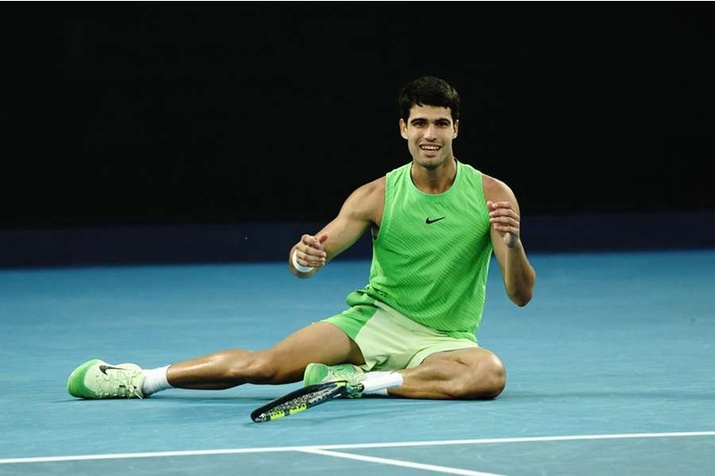
As the match wore on, the physical toll became increasingly evident. Alcaraz began to cramp, first subtly and then more visibly, particularly in his legs. Between points, he stretched his calves and hamstrings, bent over his racket, and took extra time before serving. His movement, normally explosive and elastic, became more measured, and his recovery between points slowed.
The cramping forced Alcaraz to make adjustments on the fly. He reduced his sprinting, chose when to defend and when to step in, and became more selective with his shot-making. Rather than chasing every ball, he shortened points when possible and relied more heavily on placement and variety. Drop shots and higher topspin forehands were no longer just tactical choices, but necessities to conserve energy.
Tingshu Wang / Reuters
Zverev sensed the shift and applied pressure, extending rallies and targeting Alcaraz’s movement. The German had opportunities as service games tightened and the tension mounted. But Alcaraz managed the moments carefully, using time between points to reset and staying disciplined even as his body resisted.
What stood out was the composure. Alcaraz did not panic, nor did he abandon his patterns entirely. He trusted his instincts, defended when he had to, and waited for openings rather than forcing them. Even with his movement compromised, he found clean strikes at critical moments, particularly late in the match when margins were thin.
By the closing stages, Alcaraz was clearly not moving freely. Still, he remained decisive. He served with intent, avoided unnecessary exchanges, and closed out points efficiently, sealing a victory that demanded restraint and endurance more than flair.
If Alcaraz advanced by navigating adversity, Novak Djokovic advanced by asserting control.
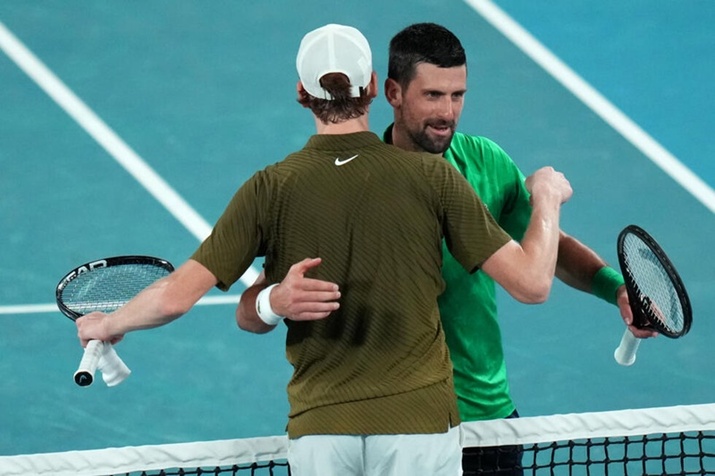
Facing Jannik Sinner, Djokovic produced a level that has become familiar in Melbourne. Sinner matched him early, striking cleanly from both wings and holding his ground in baseline exchanges. The rallies were heavy, physical, and unforgiving.
Gradually, Djokovic took command. His return game sharpened, his depth improved, and his movement remained crisp. He absorbed Sinner’s pace, redirected it with ease, and forced the Italian to press closer to the lines to stay level.
© Martin Keep, AFP
As the match progressed, Djokovic raised his level further. His serve held firm in tight moments, his shot selection was exacting, and his control of the biggest points proved decisive. The pressure mounted, the errors shifted, and Djokovic closed out the semifinal with authority.
The day produced two finalists by contrasting paths. Alcaraz arrived through endurance, management and resolve. Djokovic arrived through precision, experience, and control.
Together, they set the stage for a final shaped by physical survival on one side of the net—and sustained excellence on the other.